
One platform for marketing automation and augmentation
Marketix has four connected modules: specialist agents, a workflow builder, a shared data layer, and the Agentic Hub that coordinates them. Use them to automate the repeatable parts of marketing and give your team better tools for the rest. See how it works for the architecture.
- People
- Goals and plansOutcomes, priorities, budgets
- Guardrails and policyLimits, claims, consent rules
- Approvals and reviewConsequential work, escalations
- Agentic HubCoordinates every agent and person against one plan
- PlannerGoals into tasks
- RouterRight specialist
- Shared contextPlans, facts, audiences
- ApprovalsStates and review
- Run logEvery decision
- Specialist agents
- Research
- Content
- Demand
- Lifecycle
- Analytics
- ConnectorsTool connectorsScoped permissions, hard guardrails, every call logged
- Systems
- CRM
- CMS and site
- Ads
- Analytics
- Knowledge base
- DataSignal data layerIdentity, consent, intent, and the unified event stream
- Outcomes and learning feed back into the hub's plans.
Agentic Hub
The coordination layer that plans, routes, and reviews work across every agent and person, against one shared plan.
- Planning and goals that turn objectives into tasks with owners, dependencies, and risks.
- Routing and handoffs that send each task to the right specialist with full context.
- Shared context: one source for plans, approved facts, and audience definitions.
- Approvals and run history enforced by a state model, with every decision logged.
A goal becomes a plan the whole team can read.
- PlannerLaunch goal split into six tasks with ownersdone
- Shared contextBrief, audience, and approved facts attacheddone
- GuardrailsBrand, claims, and budget limits loadeddone
Each task goes to the right specialist with its context.
- Research agentResearching the target accountsrunning
- Content agentDrafting the launch email and landing copyrunning
- Lifecycle agentWaiting for approved copyqueued
People approve anything that ships.
- Review queueThree drafts waiting for your approvalreview
- Consistency checkClaims match the approved factspassed
- BudgetA paid spend change needs sign-offreview
Every decision is logged for audit and learning.
- Run logEach step, input, and approval recordedlive
- OutcomesResults feed back into the next planlive
- Audit trailReady to share with legal, brand, and financeready
The modules around the hub
Each module does one kind of work, and every one of them acts through the hub, under the approvals and limits your team sets.
Marketix Agents
Specialized marketing agents built to work across your stack, each with a defined role, a supervisor, and your brand rules.
- Demand and research agents are built to score intent, enrich accounts, and suggest a next step for review.
- Content agents draft and localize copy against your brand voice specification.
- Lifecycle agents are designed to personalize and route journeys across email, ads, and CRM.
- Human-in-the-loop approvals and review on everything that ships.
Flow Automation Studio
A visual builder for marketing workflows that connect the tools in your stack and run on triggers, schedules, or approvals.
- Connectors for CRM, email, ads, analytics, and data warehouse tools.
- Triggers and branching driven by events, scores, and agent decisions.
- Guardrails and approvals that keep automations within your policies.
- Versioning and rollback, with a record of every run.
Signal
A shared view of accounts, contacts, and engagement, so agents act on current, consented data instead of stale exports.
- Unified profiles that join product, CRM, and engagement signals.
- Intent scoring that agents and people read from the same place.
- Attribution designed to connect activity to pipeline.
- Consent and preference checks designed to run before any agent acts on a profile.
Inside Marketix
Design concepts for the early access product, drawn from the architecture above. Every name and record in them is an example, not customer data or results.
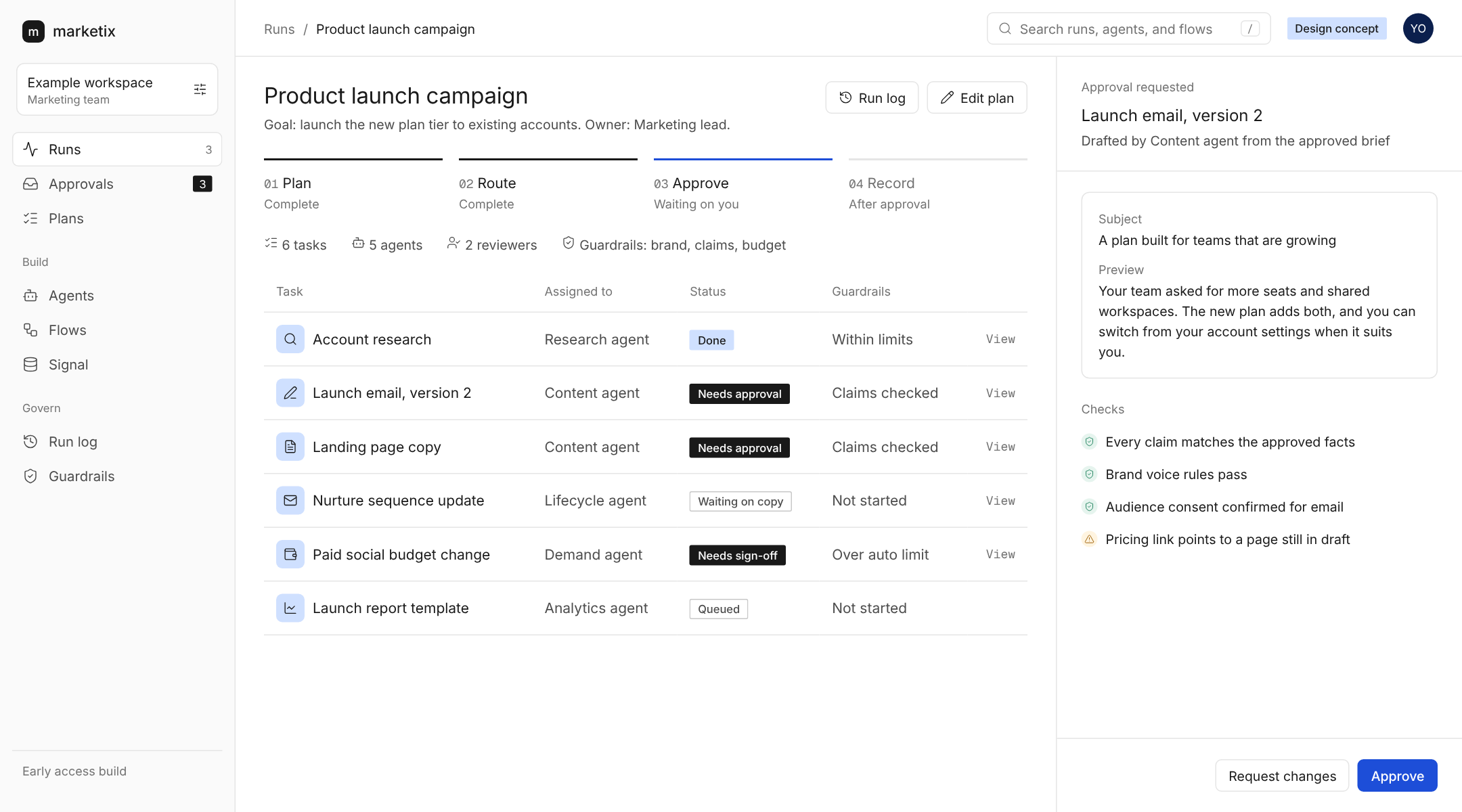
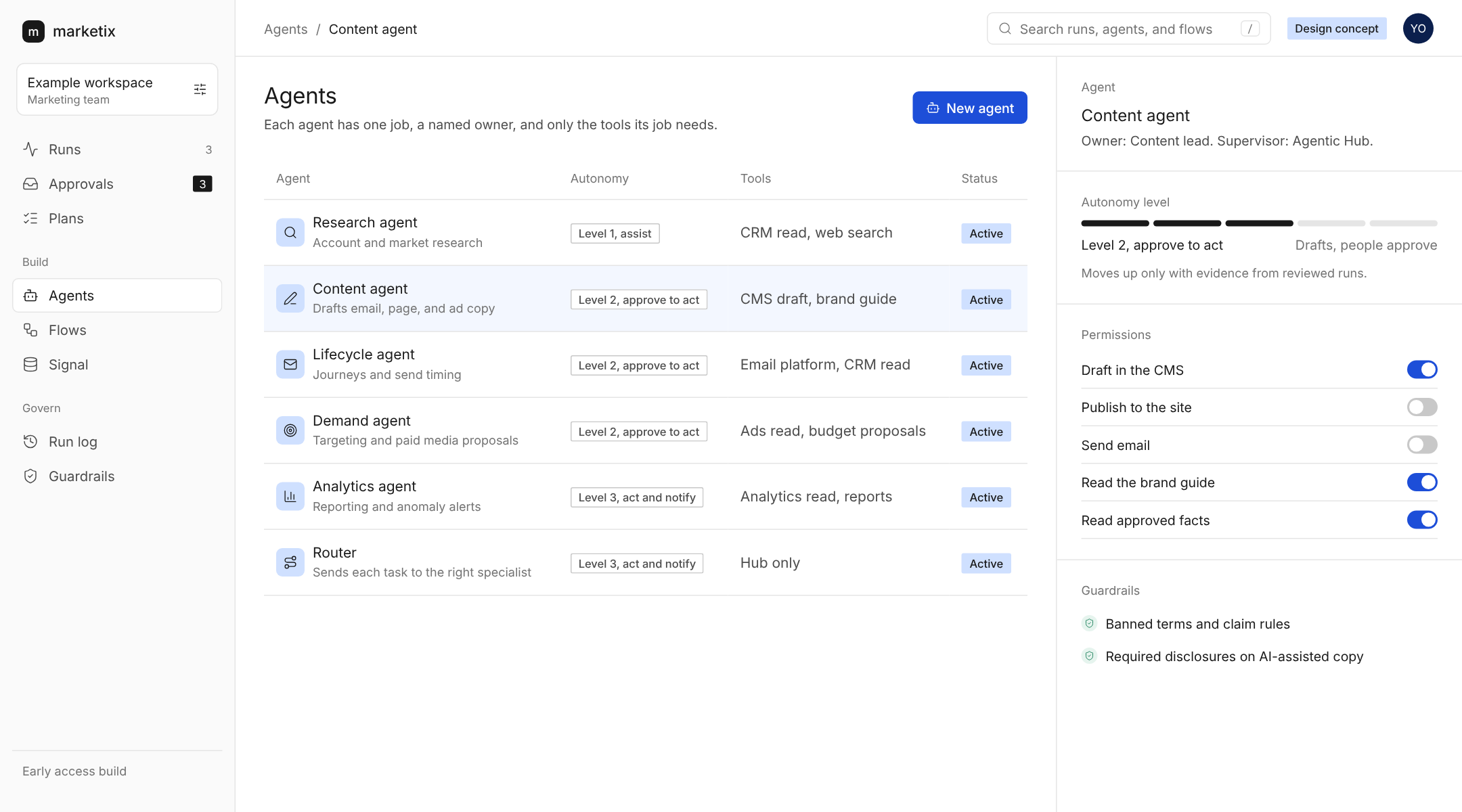
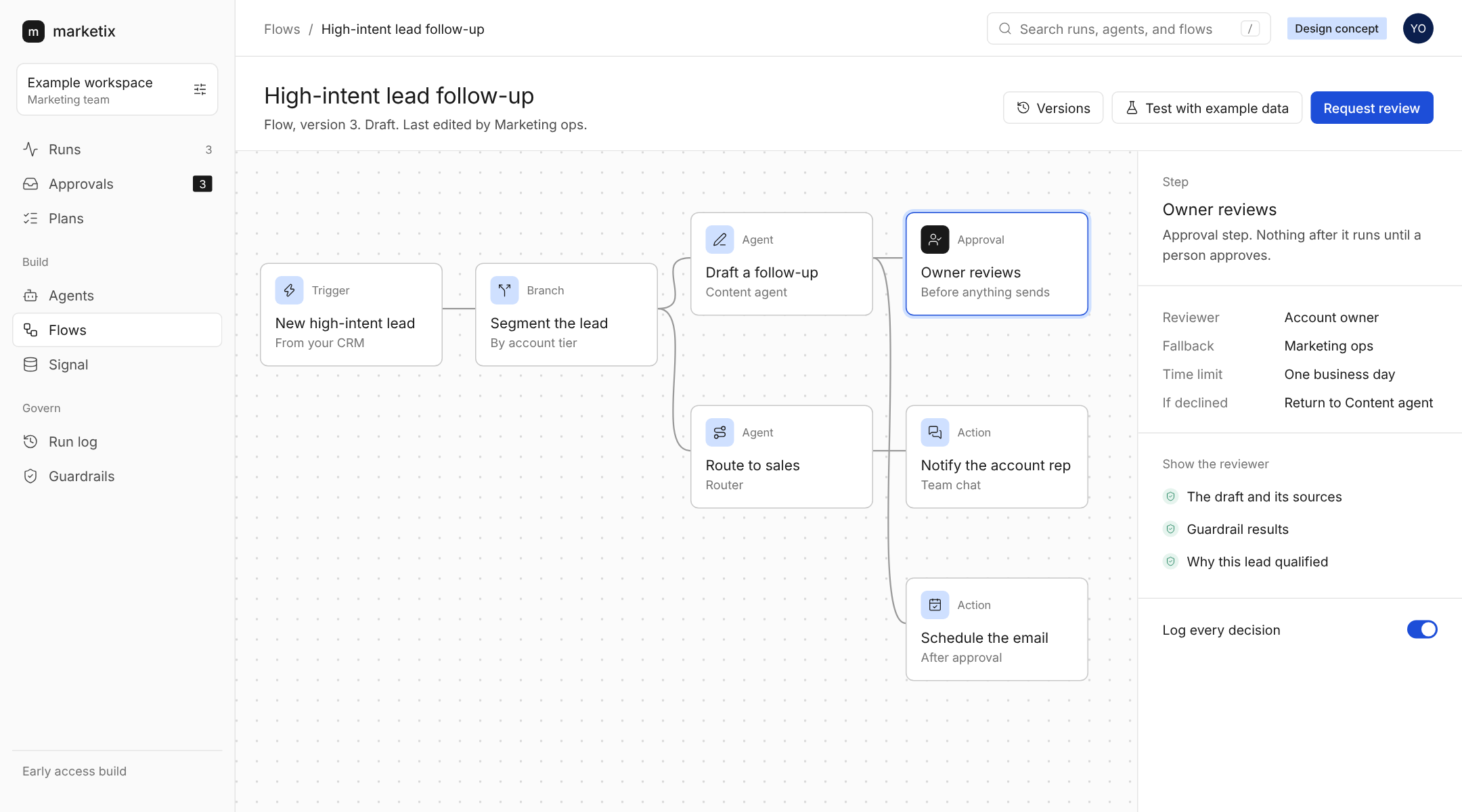
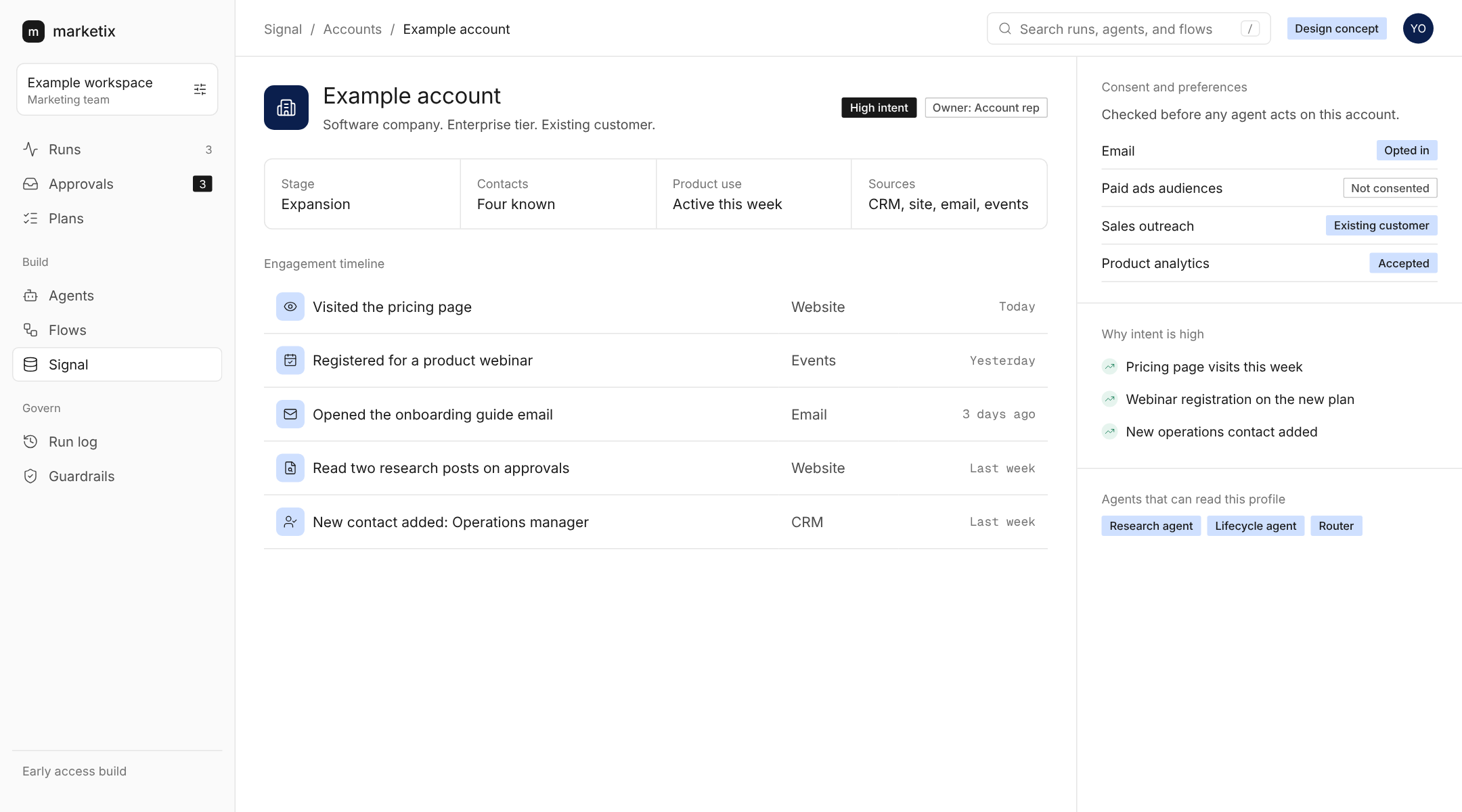
Screens are illustrative. Marketix is in early access, and the product will change as modules open.
Where teams can start
Most teams begin with one workflow where the work is repetitive and the review step is clear.
- ContentBriefs, copy, and creative drafted against your brand voice.
- DemandIntent scoring and account-based programs.
- LifecycleOnboarding, nurture, and retention journeys.
- PaidCreative testing and budget proposals within limits you set.
- SEO and AI searchContent structured to be cited in AI search answers.
- AnalyticsAttribution and contribution reporting.
- Sales enablementRouting, sequences, and battlecards for AEs.
- Human oversightApprovals and brand guardrails where you want them.
Get early access to Marketix
Marketix is in early access. Sign up and we will be in touch when there is a place for your team.